Most artists are sincere and most art is bad, though some insincere (sincerely insincere) works can be quite good.
--Stravinsky

Custom Search
Tuesday, February 28, 2006


Monday, February 27, 2006
Ocatavia Butler dies at age 58
Octavia E. Butler
22 June 1947 - 25 February 2006
I didn't know that Black people wrote science-fiction until I read Octavia Butler. I'd always enjoyed the escape and creative shot to my imagination I experienced when I read Sci-Fi and Fantasy, but when I read Octavia, I could relate. She treated subjects and social situations in her work with which I could identify as an African-American and her protagonists were women!
I believe that one of the best ways to appreciate a person and their life is to experience their legacy in some way at their passing. Below, you will find links to a USA Today story which relates the details of her death, an interview from this past November, and an essay she read during an interview on NPR a few years back.
Rest in peace Octavia.
D.M.H.
Science fiction writer Octavia Butler dies
SEATTLE (AP) - Octavia E. Butler, considered the first black woman to gain national prominence as a science fiction writer, has died, a close friend said Sunday. She was 58. Butler fell and struck her head on the cobbled walkway outside her home, said Leslie Howle, a longtime friend and employee at the Science Fiction Museum and Hall of Fame in Seattle......
Find this article at: http://www.usatoday.com/life/people/2006-02-27-butler-obit_x.htm
Friday, November 11th, 2005
Science Fiction Writer Octavia Butler on Race, Global Warming and Religion
We speak with Octavia Butler, one of the few well-known African-American women science fiction writers. For the past thirty years, her work has tackled subjects not normally seen in that genre such as race, the environment and religion. [includes rush transcript]
http://www.democracynow.org/article.pl?sid=05/11/11/158201
Exclusively on NPR Online, Octavia Butler's Essay on a World Without Racism.
Sept. 1, 2001 -- As part of NPR's special report for the UN Conference on Racism, Weekend Edition Saturday's Scott Simon interviews a writer who shares her vision of what it means to be an outsider.
http://www.npr.org/programs/specials/racism/010830.octaviabutler.html
22 June 1947 - 25 February 2006
I didn't know that Black people wrote science-fiction until I read Octavia Butler. I'd always enjoyed the escape and creative shot to my imagination I experienced when I read Sci-Fi and Fantasy, but when I read Octavia, I could relate. She treated subjects and social situations in her work with which I could identify as an African-American and her protagonists were women!
I believe that one of the best ways to appreciate a person and their life is to experience their legacy in some way at their passing. Below, you will find links to a USA Today story which relates the details of her death, an interview from this past November, and an essay she read during an interview on NPR a few years back.
Rest in peace Octavia.
D.M.H.
Science fiction writer Octavia Butler dies
SEATTLE (AP) - Octavia E. Butler, considered the first black woman to gain national prominence as a science fiction writer, has died, a close friend said Sunday. She was 58. Butler fell and struck her head on the cobbled walkway outside her home, said Leslie Howle, a longtime friend and employee at the Science Fiction Museum and Hall of Fame in Seattle......
Find this article at: http://www.usatoday.com/life/people/2006-02-27-butler-obit_x.htm
Friday, November 11th, 2005
Science Fiction Writer Octavia Butler on Race, Global Warming and Religion
We speak with Octavia Butler, one of the few well-known African-American women science fiction writers. For the past thirty years, her work has tackled subjects not normally seen in that genre such as race, the environment and religion. [includes rush transcript]
http://www.democracynow.org/article.pl?sid=05/11/11/158201
Exclusively on NPR Online, Octavia Butler's Essay on a World Without Racism.
Sept. 1, 2001 -- As part of NPR's special report for the UN Conference on Racism, Weekend Edition Saturday's Scott Simon interviews a writer who shares her vision of what it means to be an outsider.
http://www.npr.org/programs/specials/racism/010830.octaviabutler.html
Word for the week: heritage
Main Entry: her·i·tage
Function: noun
Etymology: Middle English, from Middle French, from heriter to inherit, from Late Latin hereditare, from Latin hered-, heres heir -- more at HEIR1 : property that descends to an heir
2 a : something transmitted by or acquired from a predecessor : LEGACY, INHERITANCE b : TRADITION
3 : something possessed as a result of one's natural situation or birth : BIRTHRIGHT
Function: noun
Etymology: Middle English, from Middle French, from heriter to inherit, from Late Latin hereditare, from Latin hered-, heres heir -- more at HEIR1 : property that descends to an heir
2 a : something transmitted by or acquired from a predecessor : LEGACY, INHERITANCE b : TRADITION
3 : something possessed as a result of one's natural situation or birth : BIRTHRIGHT
Friday, February 24, 2006
A Conservatory of One Monthly Themed Writing Prompts--February
Love is like a friendship caught on fire.
In the beginning a flame, very pretty,
Often hot and fierce,
But still only light and flickering.
As love grows older,
Our hearts mature
And our love becomes as coals,
Deep-burning and unquenchable.
~ by Bruce Lee ~
2/24/1992
Edward Perkins was nominated as U.S. ambassador to South Africa by President Bush.
Consider this:
Why is it so fitting that Black History Month coincides with the celebration of our human capacity to love?
In the beginning a flame, very pretty,
Often hot and fierce,
But still only light and flickering.
As love grows older,
Our hearts mature
And our love becomes as coals,
Deep-burning and unquenchable.
~ by Bruce Lee ~
2/24/1992
Edward Perkins was nominated as U.S. ambassador to South Africa by President Bush.
Consider this:
Why is it so fitting that Black History Month coincides with the celebration of our human capacity to love?
Thursday, February 23, 2006
Quote for the Week: Song of Songs
The Song of Songs
Chapter 3
1
B 1 On my bed at night I sought himwhom my heart loves-I sought him but I did not find him.
2
I will rise then and go about the city;in the streets and crossings I will seekHim whom my heart loves.I sought him but I did not find him.
3
The watchmen came upon meas they made their rounds of the city:Have you seen him whom my heart loves?
4
I had hardly left themwhen I found him whom my heart loves.I took hold of him and would not let him gotill I should bring him to the home of my mother,to the room of my parent.
5
I adjure you, daughters of Jerusalem,by the gazelles and hinds of the field,Do not arouse, do not stir up lovebefore its own time.
http://www.usccb.org/nab/bible/songs/song3.htm
Chapter 3
1
B 1 On my bed at night I sought himwhom my heart loves-I sought him but I did not find him.
2
I will rise then and go about the city;in the streets and crossings I will seekHim whom my heart loves.I sought him but I did not find him.
3
The watchmen came upon meas they made their rounds of the city:Have you seen him whom my heart loves?
4
I had hardly left themwhen I found him whom my heart loves.I took hold of him and would not let him gotill I should bring him to the home of my mother,to the room of my parent.
5
I adjure you, daughters of Jerusalem,by the gazelles and hinds of the field,Do not arouse, do not stir up lovebefore its own time.
http://www.usccb.org/nab/bible/songs/song3.htm
Monday, February 20, 2006
Word for the Week: posterity
Posterity: (noun)--1. PEOPLE IN THE FUTURE all future generations 2. ALL DESCENDANTS all of somegody's descendants
--Encarta; World English Dictionary
--Encarta; World English Dictionary
Sunday, February 19, 2006
Check out these authors featured on the Tavis Smiley Show
Tavis Smiley showcased several interesting guests this past week in celebration of Black History Month. Their recent publications touch on topics that cover a broad range of topics in the African-American experience—from the historical to current events. Each episode, this month carries a segment which focuses on an aspect of the African-American experience.
From Slavery to Freedom—John Hope Franklin
Creating Black Americans, African-American History and Its Meanings, 1619 to the Present—Dr. Nell Irvin Painter
The Forgotten Fifth—Gary Nash
Hokum, An Anthology of African-American Humor—Paul Beatty
We Who Are Dark—Dr. Tommie Shelby
From Slavery to Freedom—John Hope Franklin
Creating Black Americans, African-American History and Its Meanings, 1619 to the Present—Dr. Nell Irvin Painter
The Forgotten Fifth—Gary Nash
Hokum, An Anthology of African-American Humor—Paul Beatty
We Who Are Dark—Dr. Tommie Shelby
Friday, February 17, 2006
A Conservatory of One Monthly Themed Writing Prompts--February
Alceste The more we love our friends, the less we
flatter them; it is by excusing nothing that pure
love shows itself.
Moliere, Le Misanthrope, II, v
2/17/1942 Huey P. Newton, co-founder of the Black Panther Part, was born in Monroe, LA (d. 1989).
Consider this:
What do you think Huey would have to say about the current situation in New Orleans?
Write a response to the effects of Hurricane Katrina from his perspective.
flatter them; it is by excusing nothing that pure
love shows itself.
Moliere, Le Misanthrope, II, v
2/17/1942 Huey P. Newton, co-founder of the Black Panther Part, was born in Monroe, LA (d. 1989).
Consider this:
What do you think Huey would have to say about the current situation in New Orleans?
Write a response to the effects of Hurricane Katrina from his perspective.
Thursday, February 16, 2006
Writing Focus: Point of View
Take the following passage and rewrite it from other points of view. (See previous post from 2/2/06 "Fiction: Point of View" or click on this link, http://www.learner.org/exhibits/literature/read/pov2.html to review definitions for various points of view.)
D.M.H.
This passage is from the text of Jane Eyre found on the Project Gutenberg website, http://www.gutenberg.org/etext/1260. There are thousands of ebooks, both public domain and copyrighted, available for download.
My tale draws to its close: one word respecting my experience of married life, and one brief glance at the fortunes of those whose names have most frequently recurred in this narrative, and I have done.
I have now been married ten years. I know what it is to live entirely for and with what I love best on earth. I hold myself supremely blest -- blest beyond what language can express; because I am my husband's life as fully is he is mine. No woman was ever nearer to her mate than I am: ever more absolutely bone of his bone and flesh of his flesh. I know no weariness of my Edward's society: he knows none of mine, any more than we each do of the pulsation of the heart that beats in our separate bosoms; consequently, we are ever together. To be together is for us to be at once as free as in solitude, as gay as in company. We talk, I believe, all day long: to talk to each other is but a more animated and an audible thinking. All my confidence is bestowed on him, all his confidence is devoted to me; we are precisely suited in character -- perfect concord is the result.
Mr. Rochester continued blind the first two years of our union; perhaps it was that circumstance that drew us so very near -- that knit us so very close: for I was then his vision, as I am still his right hand. Literally, I was (what he often called me) the apple of his eye. He saw nature -- he saw books through me; and never did I weary of gazing for his behalf, and of putting into words the effect of field, tree, town, river, cloud, sunbeam -- of the landscape before us; of the weather round us -- and impressing by sound on his ear what light could no longer stamp on his eye. Never did I weary of reading to him; never did I weary of conducting him where he wished to go: of doing for him what he wished to be done. And there was a pleasure in my services, most full, most exquisite, even though sad -- because he claimed these services without painful shame or damping humiliation. He loved me so truly, that he knew no reluctance in profiting by my attendance: he felt I loved him so fondly, that to yield that attendance was to indulge my sweetest wishes.
One morning at the end of the two years, as I was writing a letter to his dictation, he came and bent over me, and said -- "Jane, have you a glittering ornament round your neck?"
I had a gold watch-chain: I answered "Yes."
"And have you a pale blue dress on?"
I had. He informed me then, that for some time he had fancied the obscurity clouding one eye was becoming less dense; and that now he was sure of it.
He and I went up to London. He had the advice of an eminent oculist; and he eventually recovered the sight of that one eye. He cannot now see very distinctly: he cannot read or write much; but he can find his way without being led by the hand: the sky is no longer a blank to him -- the earth no longer a void. When his first-born was put into his arms, he could see that the boy had inherited his own eyes, as they once were -- large, brilliant, and black. On that occasion, he again, with a full heart, acknowledged that God had tempered judgment with mercy.
My Edward and I, then, are happy: and the more so, because those we most love are happy likewise. Diana and Mary Rivers are both married: alternately, once every year, they come to see us, and we go to see them. Diana's husband is a captain in the navy, a gallant officer and a good man. Mary's is a clergyman, a college friend of her brother's, and, from his attainments and principles, worthy of the connection. Both Captain Fitzjames and Mr. Wharton love their wives, and are loved by them.
As to St. John Rivers, he left England: he went to India. He entered on the path he had marked for himself; he pursues it still. A more resolute, indefatigable pioneer never wrought amidst rocks and dangers. Firm, faithful, and devoted, full of energy, and zeal, and truth, he labours for his race; he clears their painful way to improvement; he hews down like a giant the prejudices of creed and caste that encumber it. He may be stern; he may be exacting; he may be ambitious yet; but his is the sternness of the warrior Greatheart, who guards his pilgrim convoy from the onslaught of Apollyon. His is the exaction of the apostle, who speaks but for Christ, when he says -- "Whosoever will come after me, let him deny himself, and take up his cross and follow me." His is the ambition of the high master-spirit, which aims to fill a place in the first rank of those who are redeemed from the earth -- who stand without fault before the throne of God, who share the last mighty victories of the Lamb, who are called, and chosen, and faithful.
St. John is unmarried: he never will marry now. Himself has hitherto sufficed to the toil, and the toil draws near its close: his glorious sun hastens to its setting. The last letter I received from him drew from my eyes human tears, and yet filled my heart with divine joy: he anticipated his sure reward, his incorruptible crown. I know that a stranger's hand will write to me next, to say that the good and faithful servant has been called at length into the joy of his Lord. And why weep for this? No fear of death will darken St. John's last hour: his mind will be unclouded, his heart will be undaunted, his hope will be sure, his faith steadfast. His own words are a pledge of this -
"My Master," he says, "has forewarned me. Daily He announces more distinctly, -- 'Surely I come quickly!' and hourly I more eagerly respond, -- 'Amen; even so come, Lord Jesus!'"
D.M.H.
This passage is from the text of Jane Eyre found on the Project Gutenberg website, http://www.gutenberg.org/etext/1260. There are thousands of ebooks, both public domain and copyrighted, available for download.
My tale draws to its close: one word respecting my experience of married life, and one brief glance at the fortunes of those whose names have most frequently recurred in this narrative, and I have done.
I have now been married ten years. I know what it is to live entirely for and with what I love best on earth. I hold myself supremely blest -- blest beyond what language can express; because I am my husband's life as fully is he is mine. No woman was ever nearer to her mate than I am: ever more absolutely bone of his bone and flesh of his flesh. I know no weariness of my Edward's society: he knows none of mine, any more than we each do of the pulsation of the heart that beats in our separate bosoms; consequently, we are ever together. To be together is for us to be at once as free as in solitude, as gay as in company. We talk, I believe, all day long: to talk to each other is but a more animated and an audible thinking. All my confidence is bestowed on him, all his confidence is devoted to me; we are precisely suited in character -- perfect concord is the result.
Mr. Rochester continued blind the first two years of our union; perhaps it was that circumstance that drew us so very near -- that knit us so very close: for I was then his vision, as I am still his right hand. Literally, I was (what he often called me) the apple of his eye. He saw nature -- he saw books through me; and never did I weary of gazing for his behalf, and of putting into words the effect of field, tree, town, river, cloud, sunbeam -- of the landscape before us; of the weather round us -- and impressing by sound on his ear what light could no longer stamp on his eye. Never did I weary of reading to him; never did I weary of conducting him where he wished to go: of doing for him what he wished to be done. And there was a pleasure in my services, most full, most exquisite, even though sad -- because he claimed these services without painful shame or damping humiliation. He loved me so truly, that he knew no reluctance in profiting by my attendance: he felt I loved him so fondly, that to yield that attendance was to indulge my sweetest wishes.
One morning at the end of the two years, as I was writing a letter to his dictation, he came and bent over me, and said -- "Jane, have you a glittering ornament round your neck?"
I had a gold watch-chain: I answered "Yes."
"And have you a pale blue dress on?"
I had. He informed me then, that for some time he had fancied the obscurity clouding one eye was becoming less dense; and that now he was sure of it.
He and I went up to London. He had the advice of an eminent oculist; and he eventually recovered the sight of that one eye. He cannot now see very distinctly: he cannot read or write much; but he can find his way without being led by the hand: the sky is no longer a blank to him -- the earth no longer a void. When his first-born was put into his arms, he could see that the boy had inherited his own eyes, as they once were -- large, brilliant, and black. On that occasion, he again, with a full heart, acknowledged that God had tempered judgment with mercy.
My Edward and I, then, are happy: and the more so, because those we most love are happy likewise. Diana and Mary Rivers are both married: alternately, once every year, they come to see us, and we go to see them. Diana's husband is a captain in the navy, a gallant officer and a good man. Mary's is a clergyman, a college friend of her brother's, and, from his attainments and principles, worthy of the connection. Both Captain Fitzjames and Mr. Wharton love their wives, and are loved by them.
As to St. John Rivers, he left England: he went to India. He entered on the path he had marked for himself; he pursues it still. A more resolute, indefatigable pioneer never wrought amidst rocks and dangers. Firm, faithful, and devoted, full of energy, and zeal, and truth, he labours for his race; he clears their painful way to improvement; he hews down like a giant the prejudices of creed and caste that encumber it. He may be stern; he may be exacting; he may be ambitious yet; but his is the sternness of the warrior Greatheart, who guards his pilgrim convoy from the onslaught of Apollyon. His is the exaction of the apostle, who speaks but for Christ, when he says -- "Whosoever will come after me, let him deny himself, and take up his cross and follow me." His is the ambition of the high master-spirit, which aims to fill a place in the first rank of those who are redeemed from the earth -- who stand without fault before the throne of God, who share the last mighty victories of the Lamb, who are called, and chosen, and faithful.
St. John is unmarried: he never will marry now. Himself has hitherto sufficed to the toil, and the toil draws near its close: his glorious sun hastens to its setting. The last letter I received from him drew from my eyes human tears, and yet filled my heart with divine joy: he anticipated his sure reward, his incorruptible crown. I know that a stranger's hand will write to me next, to say that the good and faithful servant has been called at length into the joy of his Lord. And why weep for this? No fear of death will darken St. John's last hour: his mind will be unclouded, his heart will be undaunted, his hope will be sure, his faith steadfast. His own words are a pledge of this -
"My Master," he says, "has forewarned me. Daily He announces more distinctly, -- 'Surely I come quickly!' and hourly I more eagerly respond, -- 'Amen; even so come, Lord Jesus!'"
Tuesday, February 14, 2006
Interesting Quote: Justice Antonin Scalia
from Yahoo! News Article "Scalia Dismisses 'Living Constitution' " by Johnathan Ewing, Associated Press Writer
Quote:
Scalia criticized those who believe in what he called the "living Constitution."
"That's the argument of flexibility and it goes something like this: The Constitution is over 200 years old and societies change. It has to change with society, like a living organism, or it will become brittle and break."
"But you would have to be an idiot to believe that," Scalia said. "The Constitution is not a living organism, it is a legal document. It says something and doesn't say other things."
End quote.
Consider this:
A static U.S. Constitution means no amendments--which also means no right to vote or citizenship for African-Americans and no right to vote for women, among other things. This begs the question: Would America be the somewhat evolved society we know today if the morally appropriate course of social action had not been repeatedly subjected to the force of law? I do not believe that it would be. Which leads me to the conclusion, that on this particular subject, idiocy is relative to the level of privilege one has or has not experienced.
D.M.H.
Quote:
Scalia criticized those who believe in what he called the "living Constitution."
"That's the argument of flexibility and it goes something like this: The Constitution is over 200 years old and societies change. It has to change with society, like a living organism, or it will become brittle and break."
"But you would have to be an idiot to believe that," Scalia said. "The Constitution is not a living organism, it is a legal document. It says something and doesn't say other things."
End quote.
Consider this:
A static U.S. Constitution means no amendments--which also means no right to vote or citizenship for African-Americans and no right to vote for women, among other things. This begs the question: Would America be the somewhat evolved society we know today if the morally appropriate course of social action had not been repeatedly subjected to the force of law? I do not believe that it would be. Which leads me to the conclusion, that on this particular subject, idiocy is relative to the level of privilege one has or has not experienced.
D.M.H.
Monday, February 13, 2006
Thoughts on Writing and Love for a Happy Valentine's Day!
I know that you remember. You can still feel the first warm rush of anticipation and ultimate satisfaction of that first encounter, the first time you met your love match. Any artist worth the name can point to that first time they knew they were in love with their art. They may have done it all of their lives, but there’s always that moment of revelation—the realization that they love what they do.
Not too long ago, I was discussing my writing pursuits with a co-worker in our break room. He’d asked me if I had homework for a class and I explained that I’m a writer. Talking to him and reflecting on the need to steal time for my art between work and kids led me to volunteer a memory. “I can remember the first time that I truly knew that I loved writing,” I stated.
I was in second grade and my young teacher, Miss Nelson gave us a writing assignment. We were to write a story on three-hole notebook paper skipping every other line to allow room for editing. I was slow to start. I had no idea where to begin. My imagination had stage fright. Miss Nelson suggested that I write about something using our school as the setting.
I sat and pondered a while longer. Eventually I began to write haltingly—not pleased with the outcome. Then it came to me. The name of the school was Lyon Street Elementary and there was a mural of a lion on the building—what if a lion really did come to our school? I scribbled furiously for 30 minutes or so.
It became a moment in the stillness of eternity. The lion escaped from the zoo. He found his way to the main courtyard. The principal ordered via intercom teachers and students to remain in the classrooms with the doors locked and blinds shuttered. Somehow, I became the hero and the lion went back to the zoo. Those details are lost to my logical adult mind.
I had been completely absorbed in the drafting of my story when Miss Nelson approached me to tell me that our writing time was ending. “How’s it going?” she asked. At this point, I proudly brandished at least ten pages of my large loopy newly learned cursive handwriting in front of me and as close to her nose as I could get. I clearly remember the look of consternation on Miss Nelsons face, which she quickly covered as my excitement began to wane due to her lack of response. When I handed her my sheaf of papers, she looked over the heavily erased and overwritten pages murmuring non-distinct phrases of encouragement. She advised me that I could finish it for homework. I barely noticed. I was absolutely euphoric. I had written my first story; Miss Nelson’s quick recovery had forestalled the ruin of my post creative zone high.
That day I discovered the power of pen and paper, of story telling. Words coupled with my imagination revealed a realm where I was completely free and in control, and also at my muse’s mercy. I’d discovered writing. I’d fallen in love.
D.M.H.
Not too long ago, I was discussing my writing pursuits with a co-worker in our break room. He’d asked me if I had homework for a class and I explained that I’m a writer. Talking to him and reflecting on the need to steal time for my art between work and kids led me to volunteer a memory. “I can remember the first time that I truly knew that I loved writing,” I stated.
I was in second grade and my young teacher, Miss Nelson gave us a writing assignment. We were to write a story on three-hole notebook paper skipping every other line to allow room for editing. I was slow to start. I had no idea where to begin. My imagination had stage fright. Miss Nelson suggested that I write about something using our school as the setting.
I sat and pondered a while longer. Eventually I began to write haltingly—not pleased with the outcome. Then it came to me. The name of the school was Lyon Street Elementary and there was a mural of a lion on the building—what if a lion really did come to our school? I scribbled furiously for 30 minutes or so.
It became a moment in the stillness of eternity. The lion escaped from the zoo. He found his way to the main courtyard. The principal ordered via intercom teachers and students to remain in the classrooms with the doors locked and blinds shuttered. Somehow, I became the hero and the lion went back to the zoo. Those details are lost to my logical adult mind.
I had been completely absorbed in the drafting of my story when Miss Nelson approached me to tell me that our writing time was ending. “How’s it going?” she asked. At this point, I proudly brandished at least ten pages of my large loopy newly learned cursive handwriting in front of me and as close to her nose as I could get. I clearly remember the look of consternation on Miss Nelsons face, which she quickly covered as my excitement began to wane due to her lack of response. When I handed her my sheaf of papers, she looked over the heavily erased and overwritten pages murmuring non-distinct phrases of encouragement. She advised me that I could finish it for homework. I barely noticed. I was absolutely euphoric. I had written my first story; Miss Nelson’s quick recovery had forestalled the ruin of my post creative zone high.
That day I discovered the power of pen and paper, of story telling. Words coupled with my imagination revealed a realm where I was completely free and in control, and also at my muse’s mercy. I’d discovered writing. I’d fallen in love.
D.M.H.
Word for the Week: ingenuity
Necessity is the mother of invention, and its father is ingenuity. Ingenuity provides the spark of creativity which fosters the opportunity presented by a recognized need. Opportunity plus ingenuity equals invention. African-American history illustrates many examples of the union of necessity and ingenuity leading to invention.
D.M.H.
ingenuity--inventiveness, cleverness, and originality.
Encarta Dictionary
Click on the link in the post title to see a list of African-American inventors.
D.M.H.
ingenuity--inventiveness, cleverness, and originality.
Encarta Dictionary
Click on the link in the post title to see a list of African-American inventors.
Saturday, February 11, 2006
A Conservatory of One MonthlyThemed Writing Prompts--February
This month's writing prompts come from the first installment of my e-book series, A Conservatory of One Monthly Themed Writing Prompts--February: Black History Month and Love: Eros, Philos, Agape.
This week's prompts:
Greater love hath no man than this, that a man lay down his life for his friends.
--John 15:13
2/11/1945
August Wilson, playwright of Fences and Piano Lessons, was born in Pittsburgh, PA.
Consider:
This week's prompts:
Greater love hath no man than this, that a man lay down his life for his friends.
--John 15:13
2/11/1945
August Wilson, playwright of Fences and Piano Lessons, was born in Pittsburgh, PA.
Consider:
- Write about the greatest expression love you've ever witnessed or experienced.
- Who is the author you admire most and why?

Get Your Copy Today!
Sources:
Great Treasury of Western Thought; A Compendium of Important Statements on Man and His Institutions by the Great Thinkers in Western HistoryEdited by Mortimer J. Adler and Charles Van Doren
AFROMATION; 366 Days of American HistoryCompiled by Michael D. Woods

Wednesday, February 08, 2006
Point of view exercise
Point of view can be a very difficult skill to master. I think of it as the “and then…” syndrome. As writers we can become so immersed in the vision of our story that we lose sight of the readers accompanying us. When we lose the thread of point of view, we fail to keep our story straight. In turn we risk losing our readers, our traveling companions.
Select two to three short stories with which you’re familiar. If you don’t read short stories regularly, select two and read them closely. For each selection, identify the point of view and see if you can identify devices used by the author to maintain that point of view. You can also check for gaps.
Ask these questions as you read: Who is doing the talking? To whom do they speak? In what form does the telling occur: Story, Monologue, Letter, etc.?
D.M.H.
Select two to three short stories with which you’re familiar. If you don’t read short stories regularly, select two and read them closely. For each selection, identify the point of view and see if you can identify devices used by the author to maintain that point of view. You can also check for gaps.
Ask these questions as you read: Who is doing the talking? To whom do they speak? In what form does the telling occur: Story, Monologue, Letter, etc.?
D.M.H.
Monday, February 06, 2006
Quote for the week: Zora Neale Hurston
Love makes your soul crawl out from its hiding place.
Zora Neale Hurston
Zora Neale Hurston
Word For the Week: love
love
Webster's online dictionary lists 24 entries for love.
Main Entry: 1love
Function: noun
(1) : strong affection for another arising out of kinship or personal ties(2) : attraction based on sexual desire : affection and tenderness felt by lovers (3) : affection based on admiration, benevolence, or common interests b : an assurance of love 2 : warm attachment, enthusiasm, or devotion 3 a : the object of attachment, devotion, or admiration b (1) : a beloved person : DARLING -- often used as a term of endearment (2) British -- used as an informal term of address4 a : unselfish loyal and benevolent concern for the good of another: as (1) : the fatherly concern of God for humankind (2) : brotherly concern for others b : a person's adoration of God5 : a god or personification of love6 : an amorous episode : LOVE AFFAIR7 : the sexual embrace : COPULATION8 : a score of zero (as in tennis)9 capitalized, Christian Science : GOD- at love : holding one's opponent scoreless in tennis- in love : inspired by affection
Webster's online dictionary lists 24 entries for love.
Main Entry: 1love
Function: noun
(1) : strong affection for another arising out of kinship or personal ties
Better Than an e-card Valentine's Day Special!
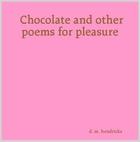
Download~Chocolate and Other Poems for Pleasure~for change!!
Order and send your copy of Chocolate and Other Poems...today! It is only available as a download through Valentine's Day!
Click on the link to get your copy:http://www.lulu.com/content/148233
Friday, February 03, 2006
A Conservatory of One Monthly Themed Writing Prompts--February
This month's writing prompts will come from the first installment of my e-book series, A Conservatory of One Monthly Themed Writing Prompts--February: Black History Month and Love: Eros, Philos, Agape.
This week's prompts:
Othello Excellent wretch! Perdition catch my soul;
But I do love thee! and when I love thee not,
Chaos is come again.
Shakespeare, Othelloe, III, iii, 90
2/3/1870: The 15th Amendment was passed, granting blacks the right to vote.
The format of your response is up to you.
Consider:
This week's prompts:
Othello Excellent wretch! Perdition catch my soul;
But I do love thee! and when I love thee not,
Chaos is come again.
Shakespeare, Othelloe, III, iii, 90
2/3/1870: The 15th Amendment was passed, granting blacks the right to vote.
The format of your response is up to you.
Consider:
- Does the excerpt from Othello remind you of someone in your life or someone else's relationship?
- Maybe, you can write about what you believe the right to vote has meant for African-Americans as well as others who were initially denied it.
Get Your Copy Today!
Sources:
Great Treasury of Western Thought; A Compendium of Important Statements on Man and His Institutions by the Great Thinkers in Western History
Edited by Mortimer J. Adler and Charles Van Doren
AFROMATION; 366 Days of American History
Compiled by Michael D. Woods
Thursday, February 02, 2006
Black History: Made Possible Dr. Carter G. Woodson
Read my Black History Article at:
www.associatedcontent.com/dmhendricks
www.associatedcontent.com/dmhendricks
Fiction: Point of View
The perspective from which a story is told can make all of the difference. The saying, "There are three sides to every story, Yours, Mine and the Truth," speaks to this. Who tells a story carries just as much importance as the story itself. Point of view shapes the way a story is told and how much detail a writer can logically relay based on their story line and characters.
D.M.H.
"Objective Point of View With the objective point of view, the writer tells what happens without stating more than can be inferred from the story's action and dialogue. The narrator never discloses anything about what the characters think or feel, remaining a detached observer.
Third Person Point of View Here the narrator does not participate in the action of the story as one of the characters, but lets us know exactly how the characters feel. We learn about the characters through this outside voice.
First Person Point of View In the first person point of view, the narrator does participate in the action of the story. When reading stories in the first person, we need to realize that what the narrator is recounting might not be the objective truth. We should question the trustworthiness of the accounting.
Omniscient and Limited Omniscient Points of View A narrator who knows everything about all the characters is all knowing, or omniscient."
Point of view definitions from www.learner.org.
D.M.H.
"Objective Point of View With the objective point of view, the writer tells what happens without stating more than can be inferred from the story's action and dialogue. The narrator never discloses anything about what the characters think or feel, remaining a detached observer.
Third Person Point of View Here the narrator does not participate in the action of the story as one of the characters, but lets us know exactly how the characters feel. We learn about the characters through this outside voice.
First Person Point of View In the first person point of view, the narrator does participate in the action of the story. When reading stories in the first person, we need to realize that what the narrator is recounting might not be the objective truth. We should question the trustworthiness of the accounting.
Omniscient and Limited Omniscient Points of View A narrator who knows everything about all the characters is all knowing, or omniscient."
Point of view definitions from www.learner.org.
Subscribe to:
Posts (Atom)